There is a familiar moment that happens outside many homes after dark: you arrive with groceries in both hands, walk toward a side door, and realize the porch light is still off. Or you hear something near the garage and have to reach for a switch before you can see what is happening.
Exterior lighting solves part of that problem, but leaving lights on all night is not always necessary. Motion-activated lighting offers a more responsive alternative, highlights Gulf Income Properties. The fixture stays quiet when an area is unused and turns on when movement is detected, providing light at the moment it is most useful.
That simple feature can improve convenience around entrances, paths, garages, patios, and side yards while also helping homeowners reduce unnecessary nighttime lighting.
Motion-activated wall lighting provides illumination when someone approaches without requiring exterior lights to remain on continuously.
Why Motion-Activated Lighting Is Useful
A traditional wall light generally gives homeowners two choices: leave it on or switch it off. Motion detection adds a third option by allowing the light to respond automatically to activity.
This is particularly useful in areas that are visited briefly rather than occupied for hours. A side entrance, for example, may only be used a few times each evening. A garage door may need illumination while someone parks or unloads the car but not throughout the entire night.
In these locations, automatic activation can make the lighting feel more practical. There is no need to search for a switch, remember to turn the fixture off afterward, or illuminate an empty area for hours.
Start With Entrances and Transition Areas
The most useful location for a motion sensor light is often somewhere people move from a dark outdoor area into the home.
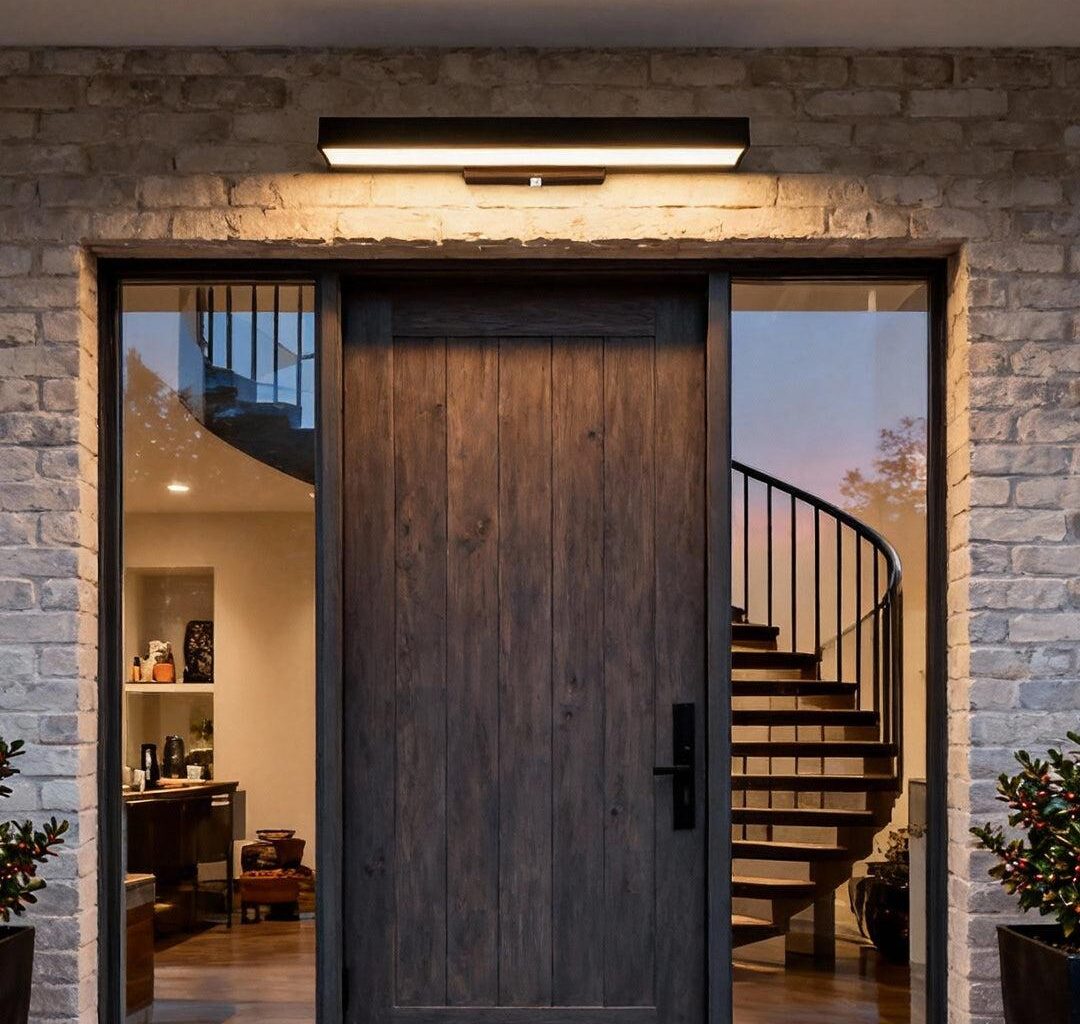
Front doors are an obvious example. Lighting that activates as someone approaches can make it easier to see steps, locks, packages, and the area around the entrance. Side doors, mudroom entrances, and garage access points can benefit for the same reason.
Driveways and garage walls are also good candidates because people frequently arrive after sunset carrying bags, tools, sports equipment, or children. Automatic light reduces the need to operate switches before unloading the vehicle.
Less obvious locations include side yards, gates, outdoor storage areas, and passages between the house and fence. These spaces may not need constant illumination, but temporary light can make them significantly easier to navigate when someone enters.
Motion Lighting Can Support Home Security
Exterior lighting alone is not a complete home security system, but visibility is an important part of a layered approach.
A dark doorway or side passage provides very little visual information. When a motion-activated fixture turns on, homeowners can more easily see who or what is moving through the area. Lighting may also improve visibility for doorbell cameras and other exterior surveillance devices when those systems are installed nearby.
The goal, however, should not be to flood the entire property with intense light every time a leaf moves. A well-positioned fixture should illuminate the area that matters without shining unnecessarily into neighboring windows or producing excessive glare.
Sensor lighting works best when it supports other practical measures such as secure locks, clear sightlines, cameras where appropriate, and good maintenance around entrances.
Choose the Detection Area Carefully
One of the biggest frustrations with motion lights is unwanted activation.
A sensor facing a busy sidewalk may react every time someone passes the house. A fixture positioned near moving branches, pets, or frequent vehicle traffic may turn on much more often than expected.
Before installation, think about the direction people normally approach from and the specific area you want the sensor to monitor. Features vary by fixture, but some models allow adjustments to detection sensitivity, range, duration, or operating mode.
These settings can make a large difference. A garage light may need a wider detection zone than a fixture beside a narrow side entrance. Similarly, a light near the front door might only need to remain on briefly, while a backyard fixture may benefit from a longer illumination period.
Look Beyond the Sensor When Choosing a Fixture
Motion detection is useful, but it should not be the only specification considered when selecting an exterior light.
The fixture still needs to work with the architecture of the house during daylight hours. Size, finish, material, light direction, mounting height, and weather resistance all matter.
Homeowners comparing different motion sensor wall lights can look at contemporary, architectural, and more decorative options before deciding which style belongs beside the home’s doors, garage, or exterior walls.
A fixture that looks appropriately scaled beside a wide garage door may appear oversized next to a narrow entry. Likewise, very small lights can disappear visually on a large façade.
Think of the sensor as one feature within a complete outdoor fixture rather than the entire reason for buying it.
Avoid Making the Light Uncomfortably Bright
It is tempting to assume that brighter exterior lighting is automatically safer. In practice, excessive brightness can create glare and make the darker areas beyond the fixture harder to see.
For residential entrances and walls, controlled illumination is usually more comfortable. Downward or diffused light can reveal the ground, doorway, and surrounding surfaces without sending a harsh beam directly toward a person’s eyes.
Warm light is also popular around residential exteriors because it tends to complement brick, stone, wood, stucco, and landscaping while creating a more welcoming appearance.
If several outdoor fixtures are visible together, using reasonably consistent color temperatures can help the property feel coordinated rather than patched together over time.
Motion Sensors Can Reduce Unnecessary Runtime
One practical advantage of sensor-based lighting is that the fixture does not have to operate continuously.
A wall light that runs from sunset until sunrise may remain on for many hours even though the area beneath it is only used occasionally. Motion control allows illumination to correspond more closely with actual activity.
This can be especially useful for secondary entrances, garages, utility areas, and outdoor storage locations.
Some homeowners may still prefer continuous low-level lighting at the main entrance for appearance or visibility. In that case, different control strategies can be used in different areas rather than requiring every exterior light to behave the same way.
Coordinate Sensor Lights With the Rest of the Exterior
A home may need several types of outdoor lighting to work well after dark.
Motion sensor fixtures can handle entrances and areas where temporary illumination is useful, while path lights guide movement through the landscape. Landscape fixtures can highlight trees and planting, and softer patio lights can support outdoor dining and conversation.
Retailers such as Dazuma Lighting offer multiple indoor and outdoor lighting categories, which can make it easier to compare finishes and fixture styles when homeowners want the exterior lighting to share a consistent design language.
The important point is not to make every fixture identical. Repeating a finish, shape, material, or general style is often enough to make different types of lights feel connected.
Remember Weather and Installation Requirements
Anything installed outside has to deal with conditions that indoor lighting never encounters. Rain, humidity, irrigation, dust, heat, cold, and direct sunlight can all affect exterior fixtures.
Check that the light is rated for the intended outdoor location and follow the manufacturer’s installation requirements. A fixture mounted beneath a covered porch may experience different exposure from one installed on an open garage wall.
Placement also matters for sensor performance. Mounting a fixture too high, too low, or at an awkward angle may affect the area it detects. Professional installation may be appropriate when electrical wiring or new circuits are required.
Final Thoughts
Motion sensor wall lights are useful because they respond to how people actually use outdoor spaces. They provide visibility when someone approaches, reduce the need to operate switches, and allow certain areas to remain dark when no one is there.
The best results come from combining that technology with thoughtful placement. Start with entrances and transition areas, control the detection zone, avoid excessive brightness, and choose a fixture that looks appropriate on the house even when it is switched off.
When those details are considered together, motion-activated lighting becomes more than a convenience feature. It can make everyday arrivals easier, improve nighttime visibility, support a broader home security plan, and create a more welcoming exterior without keeping every light on all night.