A dying fluorescent tube does not just go dark one day. It flickers, buzzes, and dims for weeks before it finally quits, and most people ignore every one of those warnings. LEDs age differently too, fading slowly rather than snapping off, which is called lumen depreciation and is measured against a benchmark called L70. replacement LED tube lights become the right call the moment you notice any of these signs, and waiting past that point usually costs more in wasted power than the new tube itself.
The Warning Signs Worth Trusting
L70 means the light is rated to keep at least 70% of its original brightness for a set number of hours, often 50,000. Once a fluorescent tube starts visibly flickering or buzzing at the ends, it has already dropped well past a comfortable brightness level and is drawing power inefficiently while doing it, point out Real Property Management Peace professionals. Waiting for total failure is not patience, it is just paying extra on the electricity bill for dimmer light.
A Quick Gut-Check List
- Visible flicker, even a slight one, especially right after turning the light on
- A buzzing or humming sound coming from the tube or the fixture itself
- Noticeably dimmer light compared to when the tube was first installed
- Yellowing or blackened ends on a fluorescent tube, a sign it is near failure
- The fixture is more than 10 years old and has never been upgraded
Old Tube vs New Tube, Laid Out Plainly
| Sign You Notice | What It Usually Means | Action Worth Taking |
|---|---|---|
| Flickering at startup | Failing ballast or aging tube | Replace with LED, ballast-bypass if needed |
| Buzzing sound | Ballast under strain | Swap fixture or bypass with direct-wire LED |
| Dim, yellowish light | Lumen depreciation past L70 | Replace tube regardless of remaining lifespan |
| Fixture over 10 years old | Outdated, inefficient by design | Full LED retrofit, not just a bulb swap |
Why Replacing Early Actually Saves Money
A 36 watt fluorescent tube swapped for a 20 watt LED equivalent can save around $288 over five years on a single tube, and that number multiplies fast across a whole building. Waiting until the old tube completely dies means you paid full fluorescent running costs the entire time it sat there flickering and underperforming. The replacement conversation should start at the first sign of trouble, not after the lights go completely dark.
My Take on Timing This Right
I would rather replace a tube a little early than a little late, every single time. The cost difference between replacing at year eight versus year twelve is small. The wasted electricity from running a dim, flickering tube for four extra years is not small. Treat the flicker as the deadline, not the total blackout.
Ballast Failure Is a Sign, Not an Accident
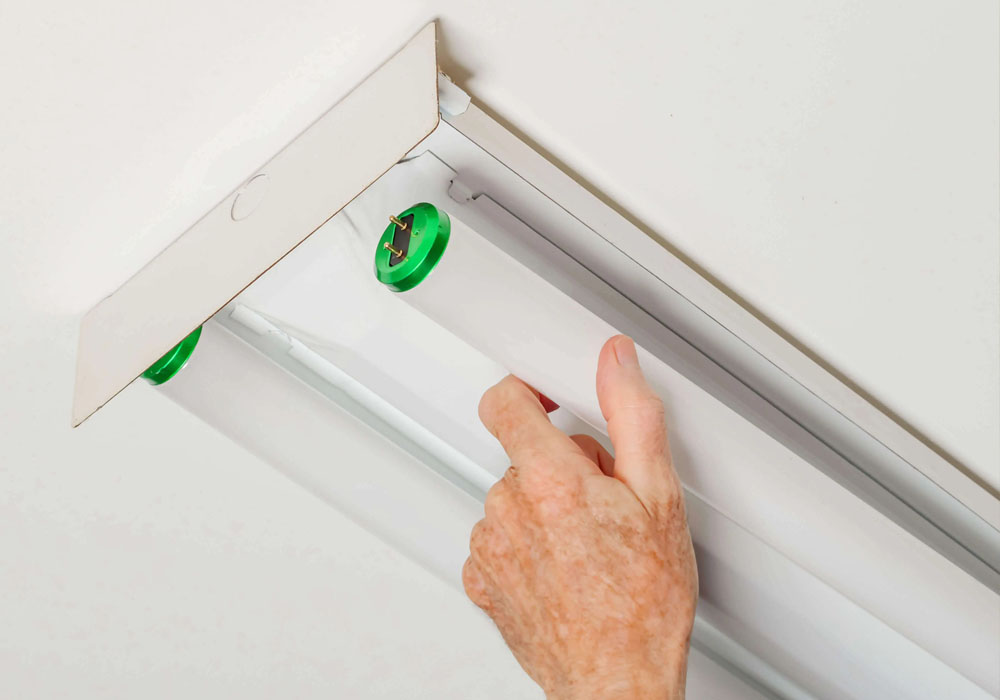
A ballast that hums, trips a breaker, or triggers repeated flickering across several tubes at once is usually past the point of a simple fix. Ballasts degrade over years of heat cycling, and once one starts failing it tends to shorten the life of whatever tube is plugged into it too. This is actually the best moment to switch to a ballast-bypass LED tube, since you fix the root cause and remove the failing part completely instead of replacing a tube that will just die again under the same faulty ballast.
How to Time a Whole-Building Switch
For a home, replacing tube by tube as each one shows warning signs works fine. For an office or warehouse, that piecemeal approach usually costs more overall because labour gets billed per visit instead of per project. A single planned changeover, replacing every tube in one pass, spreads the electrician’s time across dozens of fixtures at once and typically pays for itself faster through bulk pricing and one clean installation instead of a slow trickle of repeat callouts.